
Olive Young’s U.S. Expansion Signals a New Era for the K-Beauty Market
- GlowBridge

- Jun 4
- 4 min read
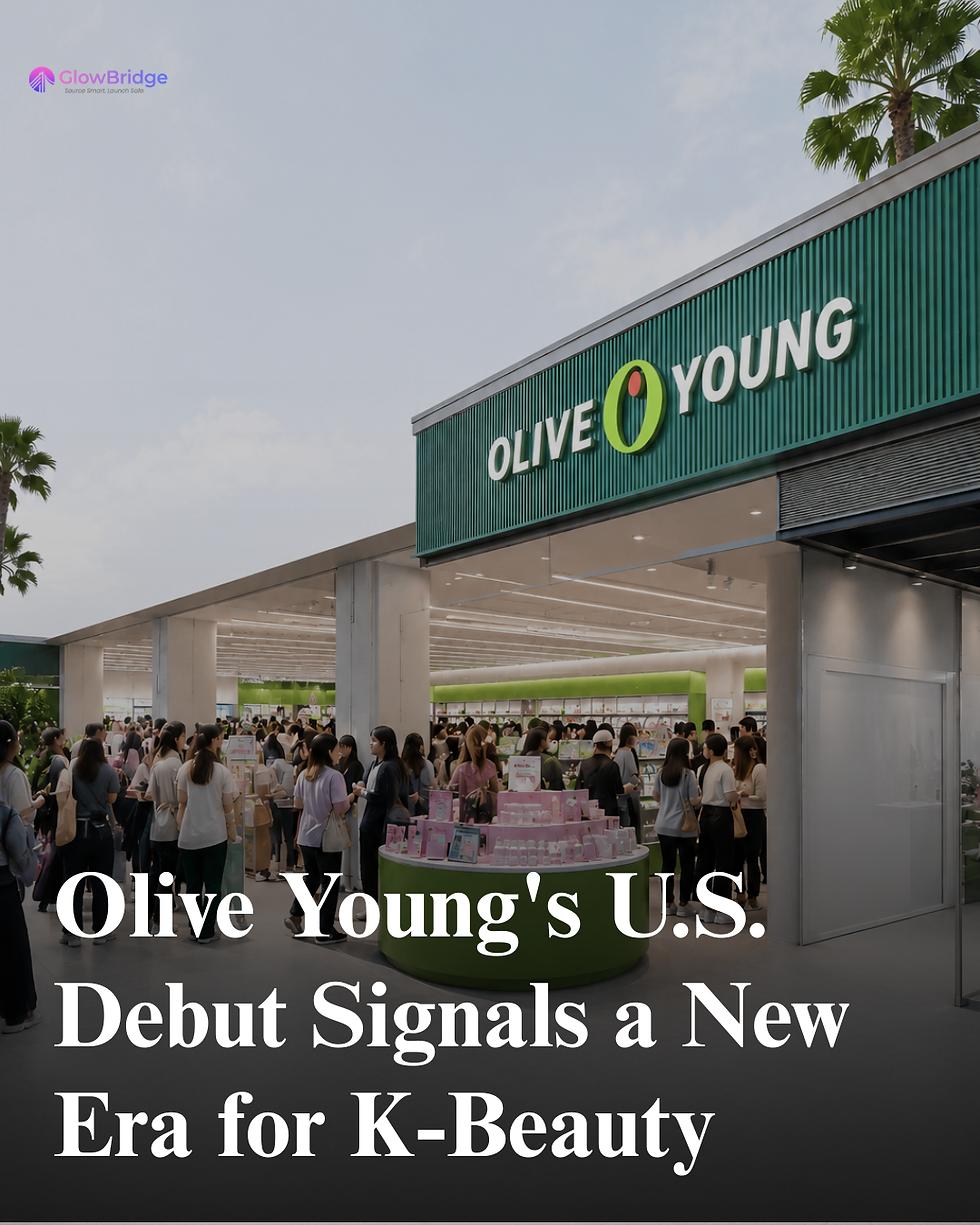
Olive Young Opens Its First U.S. Store in Pasadena, California
The global K-Beauty industry may have just entered a completely new stage.
Last weekend, Olive Young officially opened its first U.S. brick-and-mortar store in Pasadena, California. While many may initially view this as a simple retail expansion, the opening carries much larger implications for the future of Korean beauty brands in the United States.
For years, K-Beauty growth in the U.S. was primarily driven by online channels. Platforms like Amazon, TikTok Shop, specialty beauty retailers, and social media helped Korean skincare and cosmetic brands rapidly gain popularity among American consumers.
However, Olive Young’s U.S. expansion suggests that the market is now evolving beyond product sales alone.
The focus is shifting toward building a full K-Beauty retail ecosystem.
Why Olive Young Matters in the K-Beauty Industry
For those unfamiliar with the Korean beauty market, Olive Young is widely considered Korea’s largest and most influential beauty retailer.
Often compared to a combination of Sephora, Ulta Beauty, and a curated lifestyle platform, Olive Young has played a major role in shaping consumer beauty trends in South Korea for years.
The retailer is known not only for carrying trending Korean skincare and cosmetic brands, but also for creating a highly interactive shopping experience centered around:
Product discovery
Personalized recommendations
Sampling culture
Ingredient-focused shopping
Customer engagement
Beauty education
This retail model helped Olive Young become one of the most powerful platforms in the Korean beauty industry.
Now, that same system is being introduced directly into the U.S. market.
The U.S. K-Beauty Market Is Becoming More Sophisticated
One of the most important takeaways from the Olive Young Pasadena opening is that the U.S. K-Beauty market is maturing rapidly.
In the early stages of K-Beauty’s popularity in America, many brands succeeded simply by offering innovative products, attractive packaging, and competitive pricing.
Consumers were excited by concepts such as:
Glass skin
Layered skincare routines
Korean sunscreen technology
Sheet masks
Functional ingredients like centella asiatica, snail mucin, and heartleaf
But as the market grows, consumer expectations are also evolving.
Today’s beauty consumers increasingly want:
Personalized skincare recommendations
Ingredient transparency
In-store testing experiences
Educational beauty content
Community-driven shopping
Long-term brand trust
This is exactly where Olive Young’s business model becomes highly relevant.
Olive Young’s Store Experience Reflects the Future of Beauty Retail
What stood out most at the Pasadena store was not simply the number of products or Korean brands available.
It was the experience itself.
The store heavily emphasized interactive customer engagement through features such as:
Skin Analysis Services
Consumers can receive personalized skincare recommendations based on their skin condition and concerns.
Scalp Diagnostics
Hair and scalp health analysis reflects the growing consumer interest in wellness-focused beauty.
Ingredient-Based Product Discovery
Products are categorized not just by brand, but also by skin concern, ingredients, and functionality.
Sampling Zones
Customers are encouraged to test products freely before purchasing, creating a more experiential retail environment.
Loyalty Programs
The focus is not only on immediate sales, but on long-term customer retention and repeat engagement.
These strategies are common within Korea’s highly advanced beauty retail environment, but they are still relatively new in many parts of the U.S. K-Beauty market.
What This Means for Korean Beauty Brands
Olive Young’s U.S. launch also sends an important message to Korean beauty brands looking to expand internationally.
Success in the U.S. market is no longer just about having a “good product.”
Brands are increasingly competing on:
Customer experience
Retail execution
Consumer education
Brand storytelling
Community building
Long-term engagement
As the market matures, simply listing products online may no longer be enough to stand out.
Brands that can create stronger consumer relationships and differentiated retail experiences will likely have a significant advantage moving forward.
The Future of Olive Young in the United States
The Pasadena location may only be the beginning of Olive Young’s broader U.S. strategy.
If successful, Olive Young could potentially become one of the most influential gateways for Korean beauty brands entering the American market.
The retailer already holds enormous influence in South Korea through trend curation, product rankings, and consumer purchasing behavior. Bringing that ecosystem into the United States could reshape how American consumers discover and engage with K-Beauty brands.
For the beauty industry overall, this may represent a shift from “K-Beauty as a trend” to “K-Beauty as an established retail category.”
Final Thoughts
The question is no longer whether K-Beauty can succeed in the United States.
That question has already been answered.
The real question now is:
Which brands are prepared for the next phase of competition?
Olive Young’s arrival in the U.S. may be one of the clearest signs yet that the American K-Beauty market is entering a far more mature, competitive, and experience-driven era.

Your complete K-beauty bridge to the U.S. From manufacturing to FDA compliance,
we provide a seamless, execution-ready system for your brand's global success.
>>>>Click Here and Start Your Own K-Beauty Products Now
Ready to launch in the U.S.? Contact us today.
CONTACT US
Office: 1-909-229-8249
Email: hello@theglowbridge.com


Comments