
K-Beauty Sunscreen FDA Compliance: What the MISSHA & A’PIEU Lawsuit Means for Brands
- GlowBridge

- May 22
- 2 min read
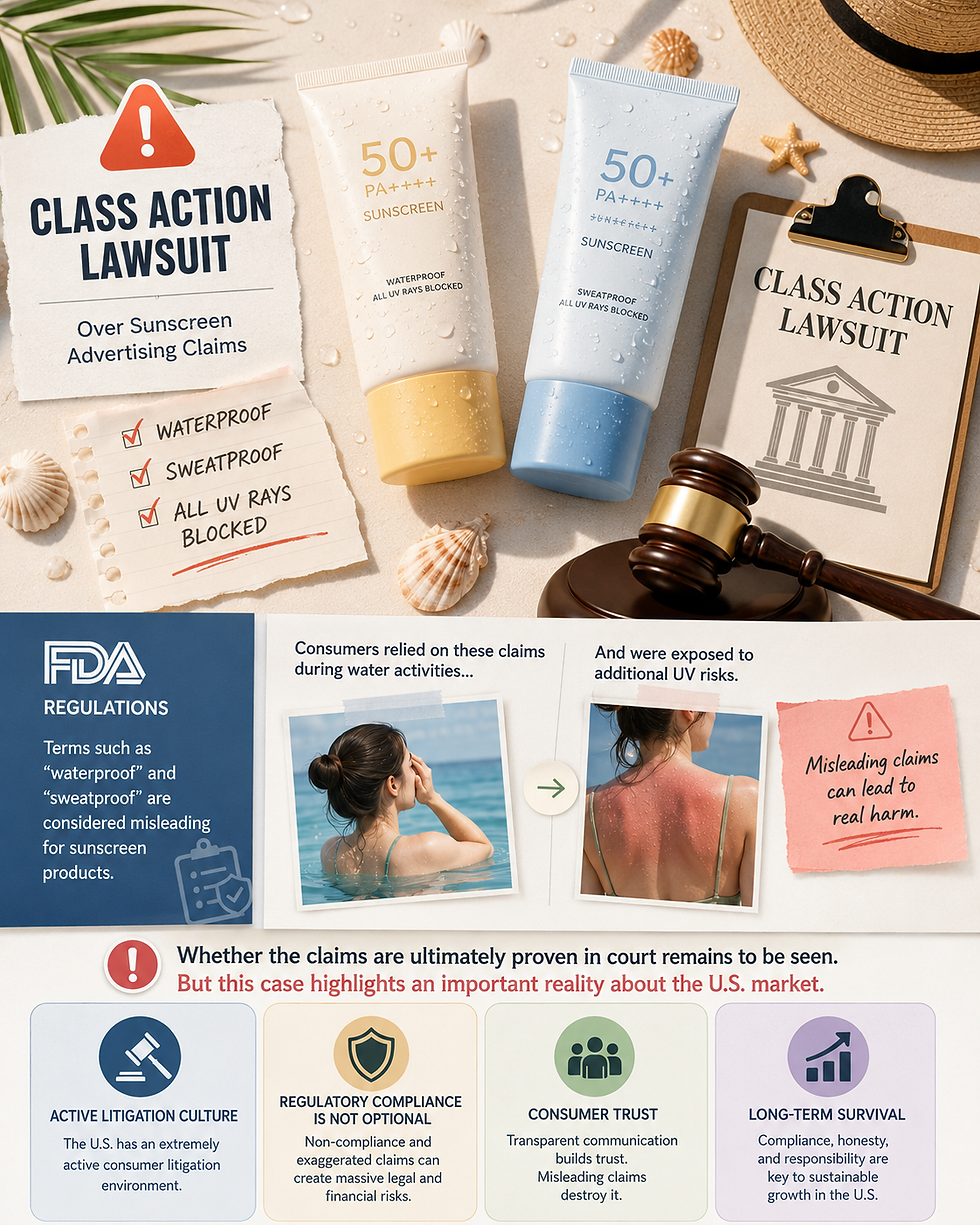
As K-Beauty continues expanding aggressively in the U.S. market, regulatory scrutiny is becoming increasingly important — especially in highly regulated categories like sunscreens.
Recently, Korean beauty brands MISSHA and A’PIEU became the subject of a proposed class action lawsuit in the United States over sunscreen advertising claims. According to the complaint filed in federal court, several sunscreen products were marketed using terms such as “waterproof,” “sweatproof,” and claims implying complete UV protection.
The plaintiffs argue that these claims violate current FDA sunscreen labeling regulations.
Under FDA rules, terms like “waterproof” and “sweatproof” are considered misleading for sunscreen products. The FDA has publicly stated that there is “no such thing as waterproof sunscreen,” and U.S. regulations place strict limitations on how sunscreen efficacy can be marketed to consumers.
[21 C.F.R. § 201.327(g) False and misleading claims. There are claims that would be false and/or misleading on sunscreen products. These claims include but are not limited to the following: “Sunblock,” “sweatproof,” and “waterproof.” These or similar claims will cause the product to be misbranded under section 502 of the FD&C Act (21 U.S.C. 352).]
The lawsuit further alleges that consumers relied on these claims during water-related activities and were exposed to additional UV risks after the products washed off.
At this stage, these are allegations made by the plaintiffs, and the court has not determined whether the claims are legally valid. However, the case itself highlights a much larger issue facing many global beauty brands entering the U.S. market.
In the United States, consumer protection litigation is extremely active.
Marketing language that may appear relatively harmless in other countries can quickly become a major legal liability in the U.S. if it conflicts with FDA regulations or creates the perception of misleading advertising.
For K-Beauty brands, this is especially important because many products are developed and marketed first under Korean or Asian consumer communication standards, which may not always align with U.S. regulatory expectations.
Sunscreen FDA compliance is particularly sensitive because sunscreens are regulated as OTC (Over-the-Counter) drugs in the United States, not simply cosmetics. This means product claims, labeling language, testing standards, and promotional materials are all subject to stricter regulatory oversight.
The financial impact of non-compliance can extend far beyond warning letters or product corrections.
Potential consequences may include:
• Class action lawsuits
• Retailer issues
• Marketplace delisting
• Reputation damage
• Consumer trust erosion
• Regulatory investigations
• Expensive relabeling or reformulation costs
As K-Beauty continues growing globally, regulatory compliance can no longer be viewed as a secondary administrative step.
It is essential brand protection, risk management, and long-term business strategy.
Especially in the U.S. market, compliance is not optional.

Your complete K-beauty bridge to the U.S. From manufacturing to FDA compliance,
we provide a seamless, execution-ready system for your brand's global success.
>>>>Click Here and Start Your Own K-Beauty Products Now
Ready to launch in the U.S.? Contact us today.
CONTACT US
Office: 1-909-229-8249
Email: hello@theglowbridge.com


Comments